

Monday’s article was a great trip down memory lane — revisiting some of my biggest wins. And to be honest, it stroked my ego a little too much while writing it. So today, as a companion to that piece, I’m showing my biggest losses and why I got them wrong.
Because independent investing isn’t a cheat code. Sometimes you read the trend perfectly and still get burned. I want to share my three biggest losses on a percentage basis from my own personal brokerage. Each one had a different thesis going in, and a different reason it fell apart.
But First — Let’s Get Something Straight
I'm not writing this from the sidelines, and I'm not deep in the red either. I'm a successful investor and I plan to stay one. Here's my YTD return — which actually happens to be the slowest start I've had so far.
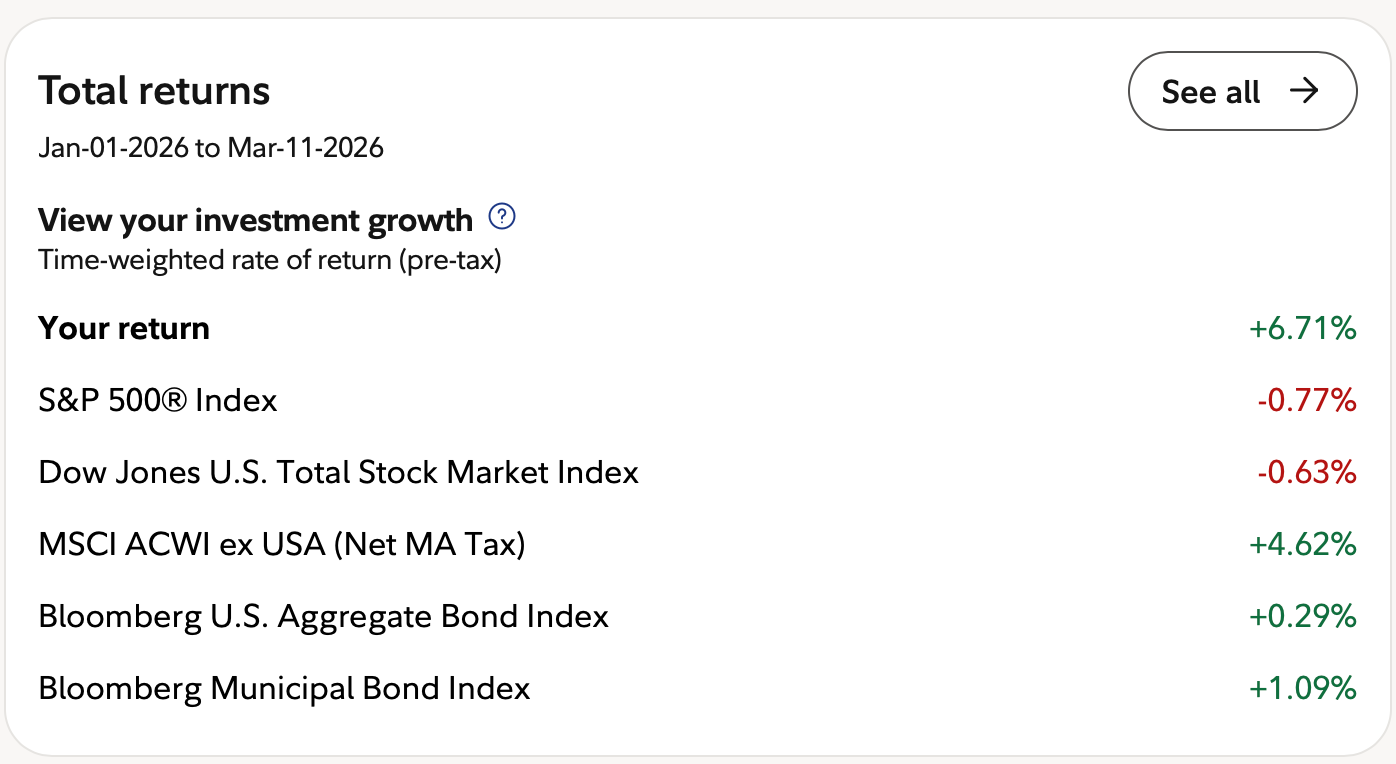
That's my personal brokerage, which runs a much more conservative strategy. Separate from that, I have a personal experimental paper account (not the "Starting Over With $10K" portfolio — this is a different one). Here's the return since inception, about ten months in:
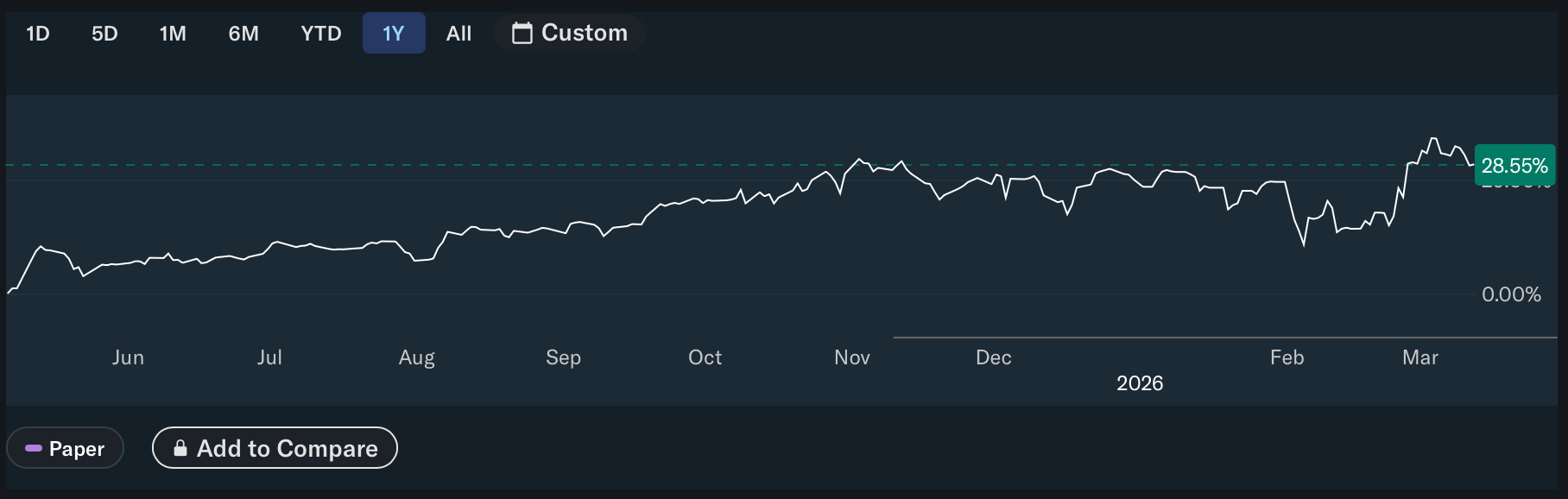
Losses are part of the game for every investor, including profitable ones. What separates winners from the rest is learning from your mistakes. Repeat what works until it doesn’t. When you lose, figure out what went wrong and why. That’s what’s made me successful so far.
So without further ado — let’s get into it.
Pinterest (PINS) - User Sometimes DON’T Equal Dollars…
My Thesis:
Everyone and their mom uses Pinterest — literally. My mom, other female family members, female friends, the girl I was seeing at the time. When I say everyone, I mean it. On a price-to-earnings basis, it looked criminally undervalued compared to big names like Meta, Snapchat, or even YouTube specifically.
What Went Wrong:
Users don't always mean dollars. I was right in my analysis: the user count was growing astronomically and PINS was indeed undervalued on paper. But I was blind to the fact that management was unable — or unwilling — to capitalize on all those new users. More ads, subscriptions, better monetization tools — none of it came. So this for-profit business with hundreds of millions of active users was bringing in pennies on the dollar compared to what it should have been.
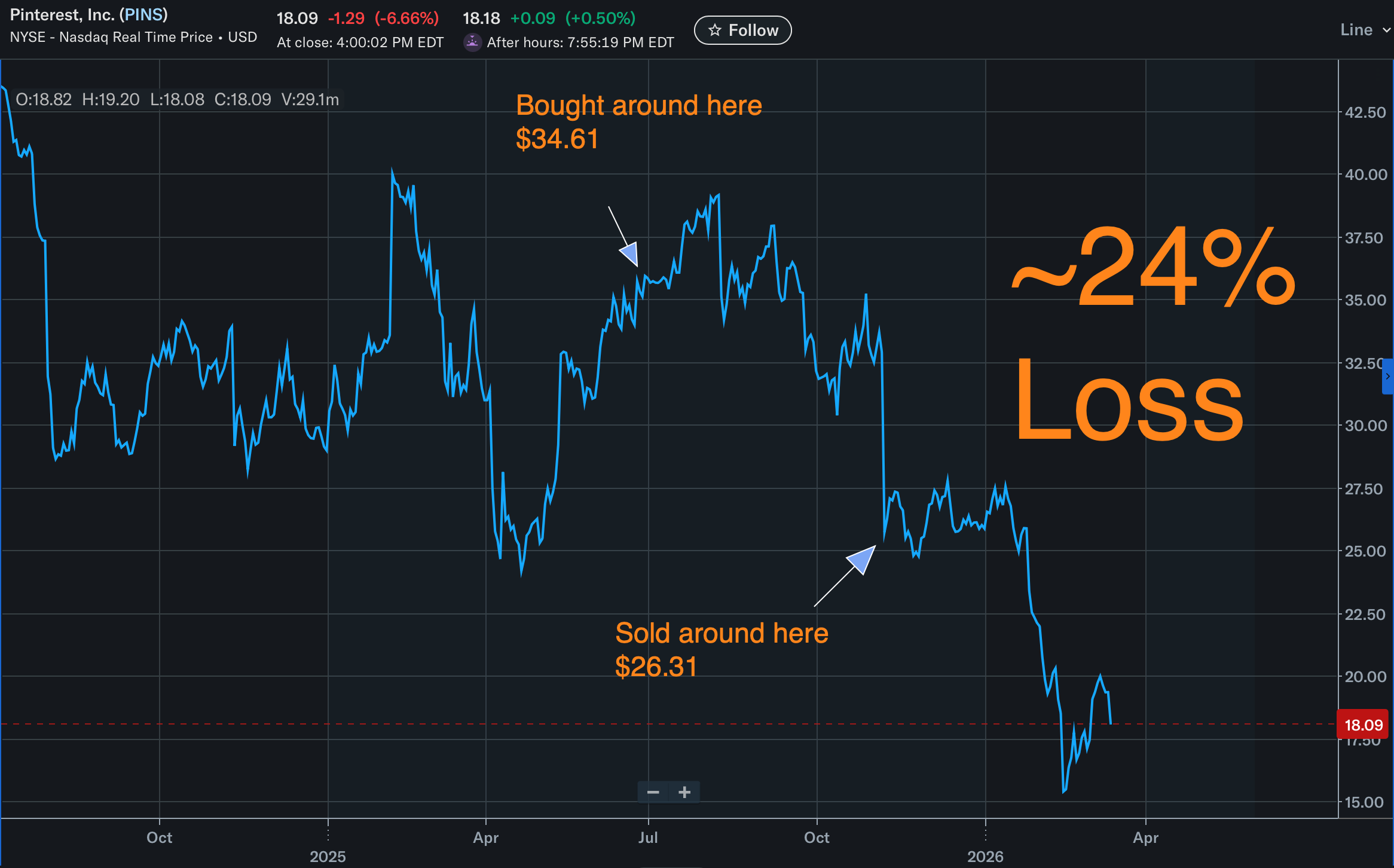
The Lesson:
A crowded product with ~8% margins is often a worse investment than a quieter one running at 20%. I saw the trend correctly, but I missed one of the most important pieces of the puzzle — and the business still hasn’t figured it out. If Pinterest eventually grows their margins and introduces real ways to monetize users, I’ll give it another look. For now, it’s a hard loss to stomach.
Pinterest taught me that popularity doesn’t equal profit. But the next two losses taught me something harder — about listening to the wrong people, fighting the market, and knowing when to walk away.
