

I remember frantically searching Micro Center for the last part I needed to build my PC.
I’d called ahead — three left in stock. That was an hour ago. Aisle by aisle, I hunted, running through the mental math of how close I was to finally finishing this build. Then my stomach dropped. Another customer was walking toward checkout clutching the exact component I needed.
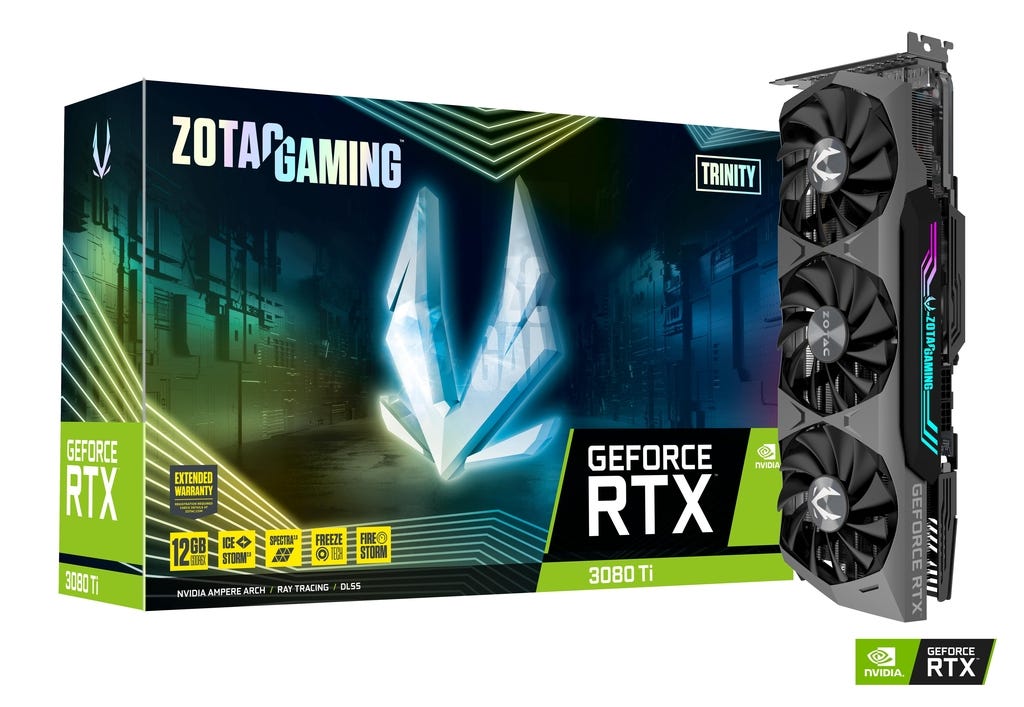
I rushed to where he came from. One box left on the shelf. I grabbed it — a graphics card, $1,800 at the height of the GPU shortage. I didn’t care. My build was finally complete.
On the drive home, I couldn’t stop talking about specs and frame rates. My father, an avid investor, mentor, and Monk Investments reader (thanks Dad!) was quiet for a moment. Then he said something I didn’t think much of at the time:
“If this thing is in this great of demand and in constant shortage, the company ought to be doing pretty well for themselves.”
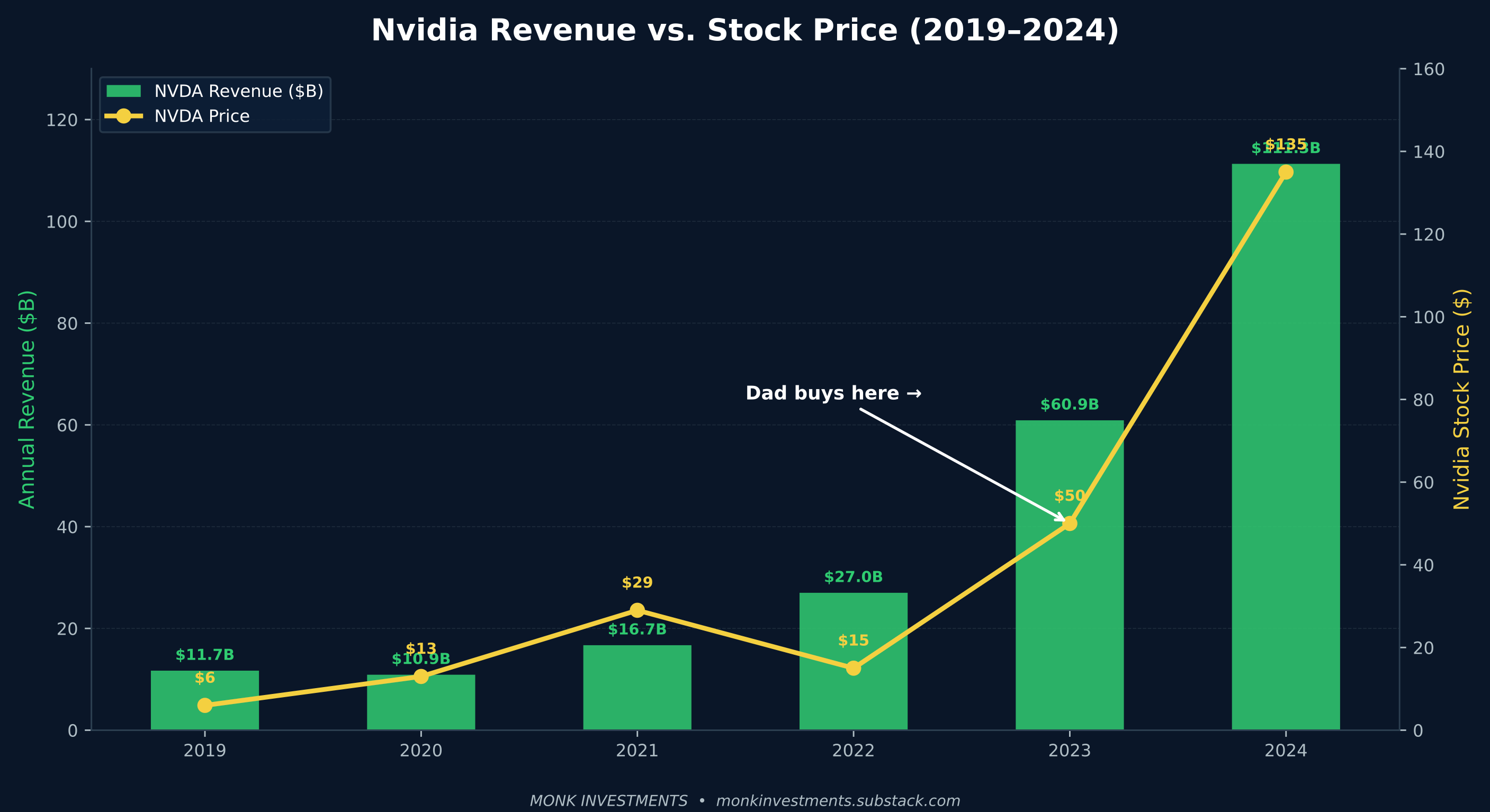
The graphics card was an Nvidia GeForce 3080 Ti. Hours later, my dad bought Nvidia stock.
He didn’t read an analyst report. He didn’t study a chart. He watched his son nearly lose a fistfight in a computer store over a product that was impossible to keep on shelves — and that told him everything he needed to know.
That was 2023. He’s still holding, and on a percentage basis, Nvidia has been the biggest winner of his investing career.
My dad didn’t have insider information or a Bloomberg terminal. He just paid attention. And that instinct — noticing what people around you can’t stop buying — might be the most underrated investing edge there is.
It’s Simple, Invest in What You Know
The brands you use, trust with your daily life, and see as almost a necessity tell you something about their business — not just about your relationship with them as a customer.
Legendary investor Peter Lynch built his career on this exact idea:
Know what you own and why you own it.
- Peter Lynch
One of the best investors of his generation, and this was his main tool to beat the S&P 500 for over a decade.
So instead of scrolling through misleading newsletters, Googling “best stocks to buy 2026,” or — God forbid — considering a Motley Fool subscription, let’s break down this simple investing mindset.
Don’t be a Consumer, be an Investor
This simple idea is, unfortunately, a big part of what separates everyday investors from the ones who consistently win. But the catch is, to truly capitalize on trend-based investing, you have to be early. Not on time — early.
That means leaving the charts, shutting down Bloomberg, and cutting back on the financial news. When you’re out in public, just become annoyingly more observant than usual. Sometimes the opportunity is as obvious as my graphics card dilemma. Other times it starts as a quiet thought that sends you down a rabbit hole.
This might sound like something that only comes naturally to career investors like Peter Lynch. But I’d argue it’s easier now than it’s ever been. TikTok, Reddit, Instagram — everything you scroll through is a front-row seat to emerging trends. By the time an analyst publishes a report, an attentive investor has already been watching the stock climb for six months.
Proof This Actually Works
My Nvidia example is certainly a cherry-picked winner. But I have plenty of other examples to share — ones I'd bet many of you have experienced yourselves. Starting with a morally questionable investment that was screaming "buy."
Vapes
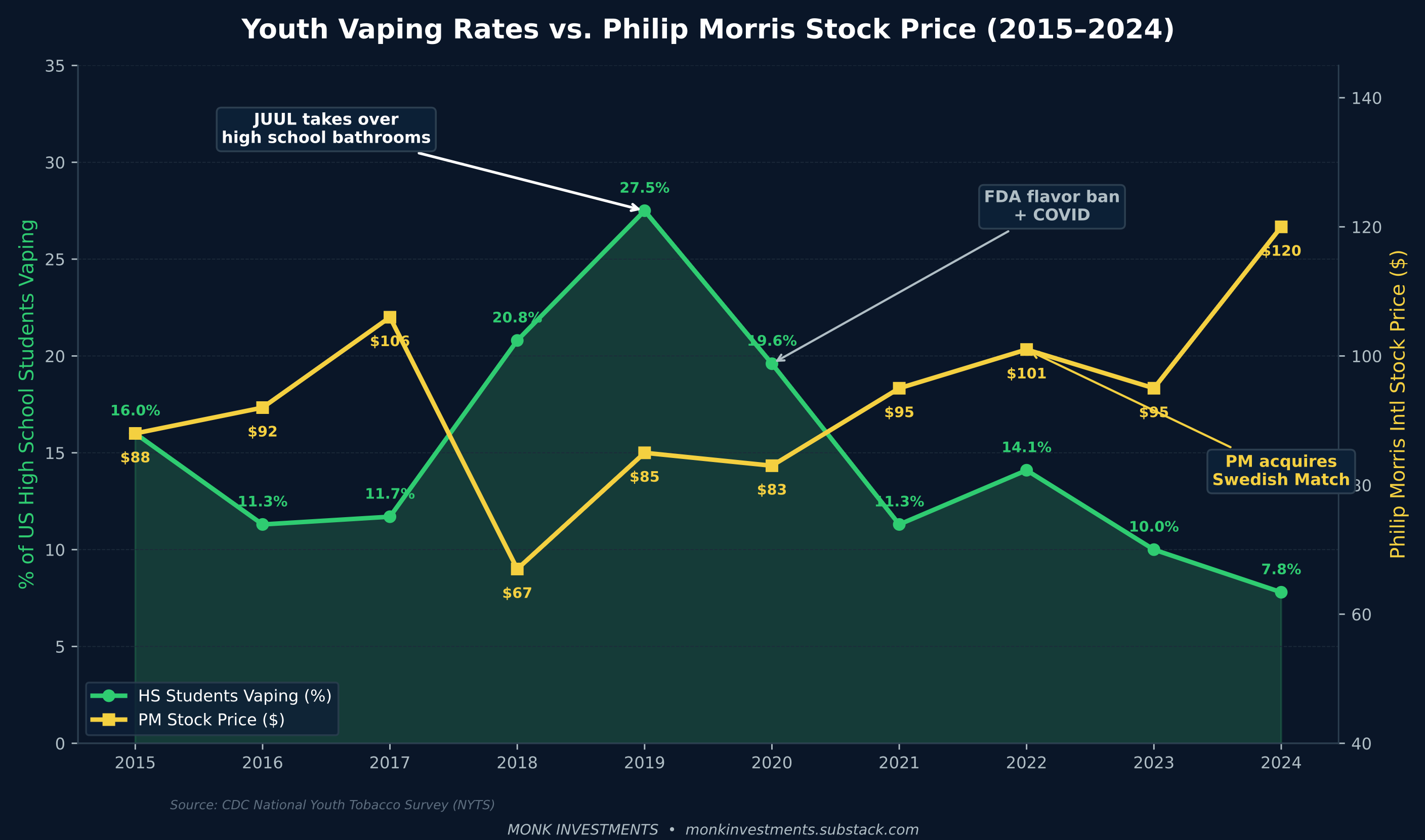
I have vivid memories of walking into high school bathrooms and inhaling straight cotton candy and sweet mixed fruit clouds.
Instead of acting like a hall monitor, I figured there was an opportunity here. I researched which stocks were connected to vapes and landed on Philip Morris (PM) and Altria (MO). After digging deeper, Philip Morris stood out as the stronger play. I invested in 2020–2021 and sold in 2022 for a solid 20% profit.
Electric Vehicles
As many of you probably noticed, it felt like Teslas took over every road for a while. While there were plenty of underlying issues with Tesla stock, one thing remains universal for any business: more sales means more money. And Tesla was no stranger to selling cars from 2021 to 2024. With the stock's steep drop in 2022, it looked like a perfect opportunity to buy.
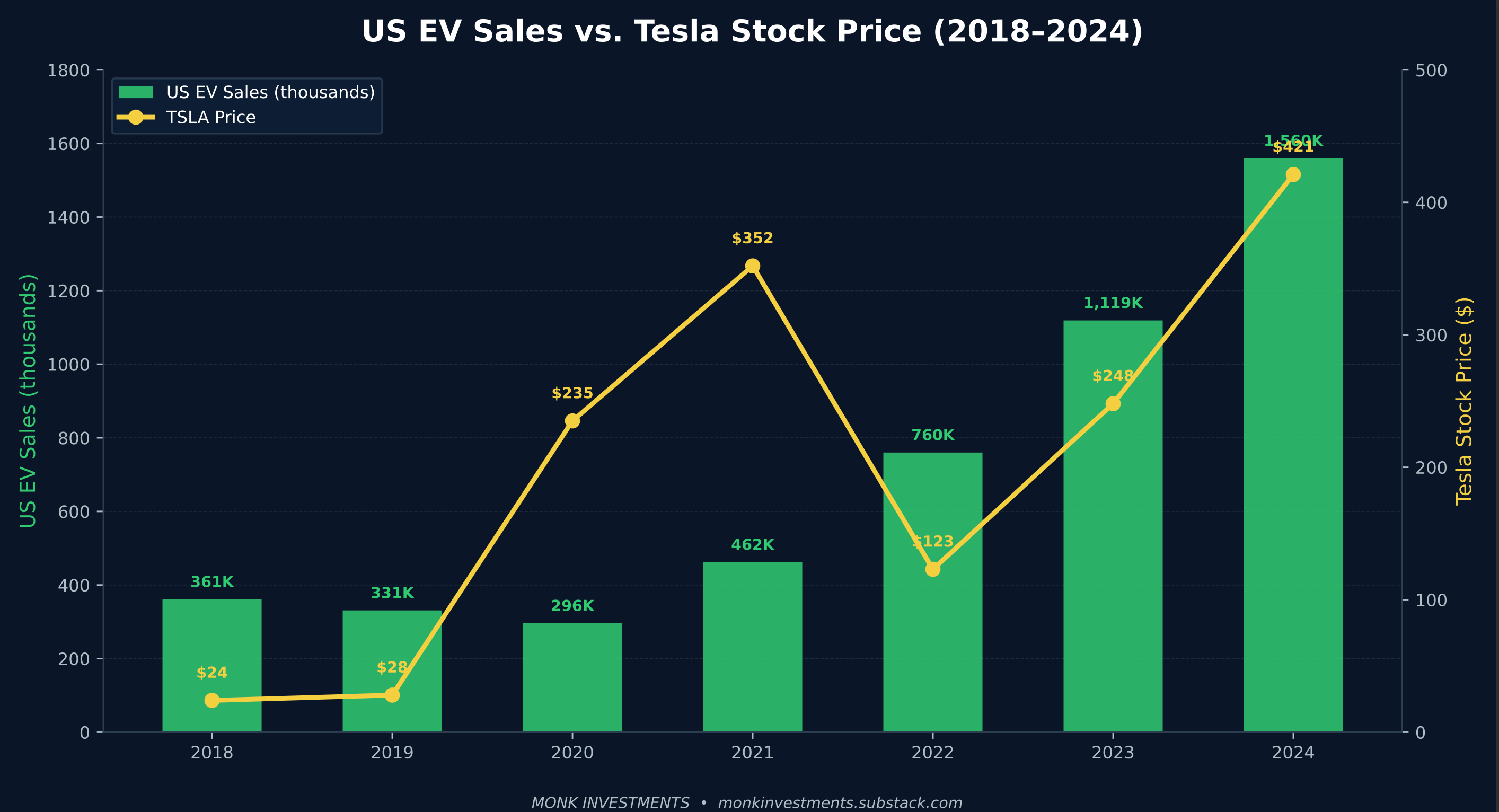
To be clear, Tesla's fundamentals were far from impressive — and that was true in 2022 as well. But this was a riskier swing trade I was willing to take. I knew what I was seeing on the road wasn't deceiving me: a lot more Teslas.
Chip Shortage
Revisiting the Nvidia example, the explosive growth this company has had speaks for itself. Their rally really started with the chip shortage I braved in 2023, but as we know, it's continued well beyond that as they've expanded into data centers.
Doing This Wrong Will Cost You
A fair warning: simply liking a product doesn’t mean the business behind it is worth investing in.
The world doesn’t revolve around whether Joe himself vapes or drives a Tesla. These companies succeed or fail based on whether they’re profiting off the massive wave of people adopting these products.
There are checks to make anytime you think you’ve stumbled onto an investment opportunity in the wild.
Is this company actually making money?
Is the stock already priced well or overpriced?
Is this a fad a small demographic is picking up, or a global trend?
Keep it simple. Observe. If something catches your eye, check the numbers. If the stock is underpriced and you're early to the trend, consider buying. And if anything in that equation doesn't add up, abandon ship. Better to admit you were wrong and lose nothing than keep your pride and watch your dollars slide.
Real World Practice
This can seem like a daunting task. “I’m already trying to learn how to invest — now I have to do it at the grocery store too?” Yes. Let curiosity get the best of you.
I encourage you — yes, you reading this — to keep a running note on your phone for any opportunities that cross your mind when you’re out and about. You can decide later whether they’re worth pursuing, whether the numbers back it up, or whether you actually want to put real money behind the trend.
This is independent investing at its finest.
You don’t need a Bloomberg terminal or a finance degree. Your everyday life gives you more investment signals than any overpriced newsletter ever could — but it relies on you paying attention. The next time you’re standing in line and everyone around you is holding the same brand, think twice before you check out.
Enjoyable and informative read!